
Should You Repair or
Replace Your Gutters?
A single leaking joint may need a targeted sealant touch-up. But continuous leaks, sagging slopes, and rotten fascia boards demand a full seamless replacement. Make an informed financial decision before calling a contractor.
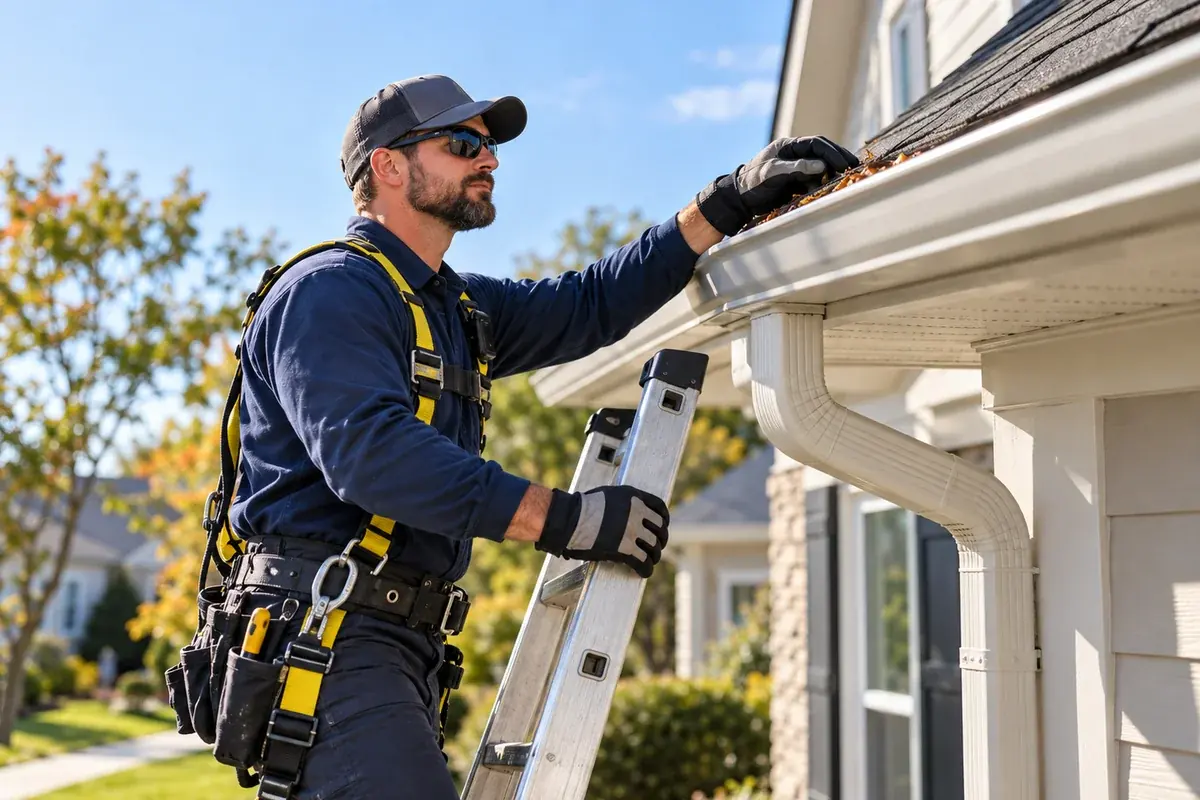
System Age & Metal Integrity Testing
Contractors examine fastener pull-out, aluminum corrosion, and wood rot behind the metal to recommend repair vs. replacement.
The Short Answer
How to quickly determine whether a localized fix will hold or whether replacement is the sensible economic choice.
Repair may make sense when...
- Damage is localized to an isolated seam, corner miter, or end cap.
- The metal trough itself is structurally sound with zero rust perforations.
- The backing wooden fascia board is solid and free of rot or softness.
- Sagging is caused by a few loose brackets that can be re-secured with screw-in hangers.
Replacement may make sense when...
- Widespread corrosion, pinholes, or cracks span multiple trough sections.
- Sectional joints have failed repeatedly despite multiple sealing attempts.
- Existing 5" gutters lack capacity for the roof volume, causing constant overflow.
- Recurring damage and cumulative repair costs make replacement worth comparing.
Repair vs. Replacement: Direct Comparison
Evaluate key operational factors before committing your budget.
| Decision Factor | Repair Considerations | Replacement Considerations |
|---|---|---|
| Extent of Damage | Best for 1–2 isolated leaking miters or detached brackets. | Consider when deterioration is widespread or repeated repairs no longer address the cause. |
| Recurring Seam Leaks | Repair durability depends on joint condition, movement, preparation, and sealant compatibility. | Continuous runs reduce intermediate joints; corners, outlets, and end caps still need attention. |
| Gutter Slope & Capacity | Re-pitching can fix minor sagging if troughs are adequately sized. | Sizing requires a roof catchment, rainfall, profile, outlet, and downspout assessment. |
| Fascia Wood Condition | Works only if wood backing has solid screw holding strength. | Allows full access to remove and replace rotted wood and drip edges. |
| Project Disruption | Completed in a few hours with minimal site disruption. | Requires roll-forming truck on site; typically takes 1–2 days. |
| Short- vs Long-Term Budget | Lower immediate outlay; may require recurring maintenance. | Higher initial investment; service life depends on material, installation, exposure, and maintenance. |
| Material Uniformity | Patched areas or new replacement sections may visibly mismatch faded runs. | Uniform fresh color finish matched to modern exterior siding trim. |
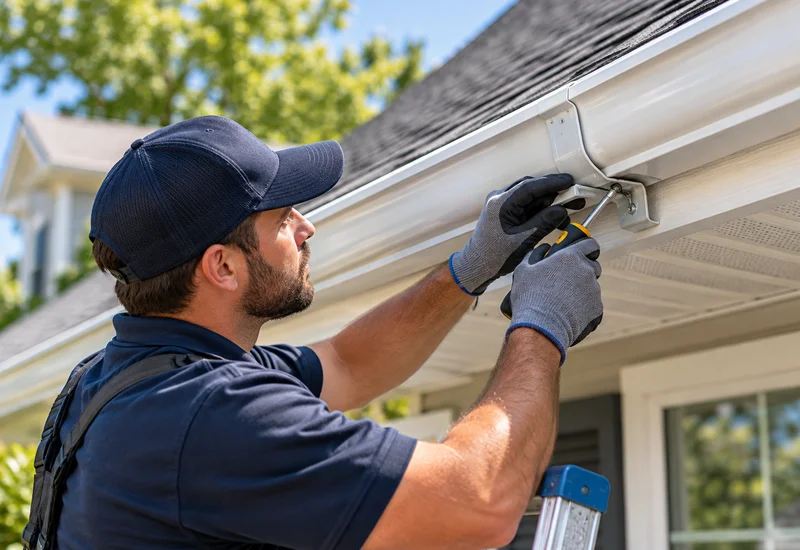
Hanger Re-Securing & Joint Sealing
Cost-effective when underlying fascia boards and overall metal troughs retain full structural strength.
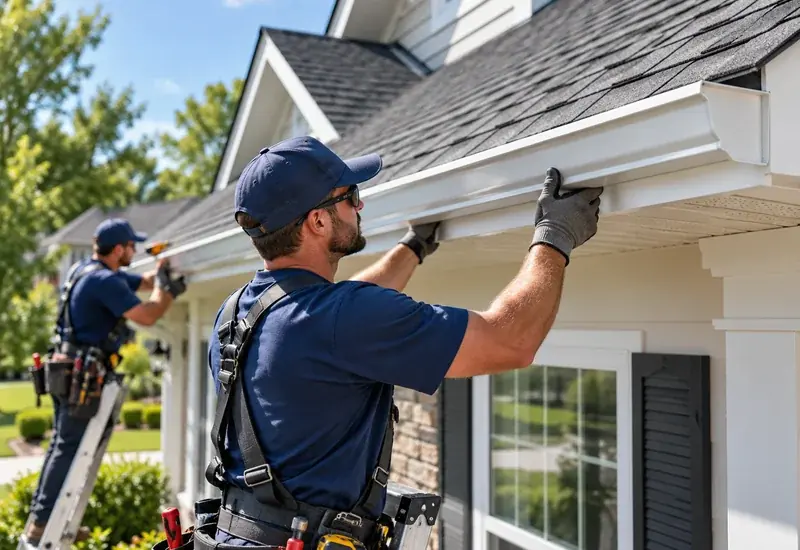
Continuous Seamless Run Extrusion
Replaces deteriorated runs and allows the installer to reassess gutter profile, outlets, and downspouts for the roof.
Start With What You Can Observe Safely
Follow these 4 ground-level observation stages to guide your decision without climbing onto ladders.
Isolated Joint Drip
If drips only occur at one corner miter while the rest of the run drains smoothly, a localized seam resealing is likely sufficient.
Sagging or Detachment
Inspect the fascia behind the loose area from the ground. If daylight shows or spikes are hanging loose, structural support must be checked.
Multiple Failing Sections
When leaks occur along 3+ joints, metal is rusting through, or troughs are warped from heavy ice, localized patches stop making economic sense.
Overflow With Clean Trough
If water spills over even when the trough is completely clear of leaves, evaluate trough size and downspout capacity before re-pitching.
When Gutter Repair Is Worth Considering
Targeted repairs can make sense when the remaining metal, joints, and backing are sound and the drainage design is suitable.
When Replacement Deserves a Closer Look
When gutters reach the end of their design lifecycle, cumulative repair costs often match the price of a brand-new seamless aluminum system.
What Actually Changes the Cost?
Gutter quotes depend on tangible architectural variables. Always demand a written line-item scope before signing.
Total roofline length. Heavy gauge aluminum (0.032") resists ladder crushing and snow load better than thinner 0.027" stock.
Two- and three-story rooflines or steep gables require specialized safety staging, slowing installation time.
A single detached corner is a rapid repair; full-run re-pitching requires removing dozens of brackets.
Rotted wood must be removed, replaced with primed spruce or PVC, and caulked before hanging gutters.
Complex roof geometry requires extra drops, offset elbows, and leader extensions to protect foundation walls.
Tear-off, metal recycling fees, and thorough magnetic sweeping of lawn and driveway for dropped screws.
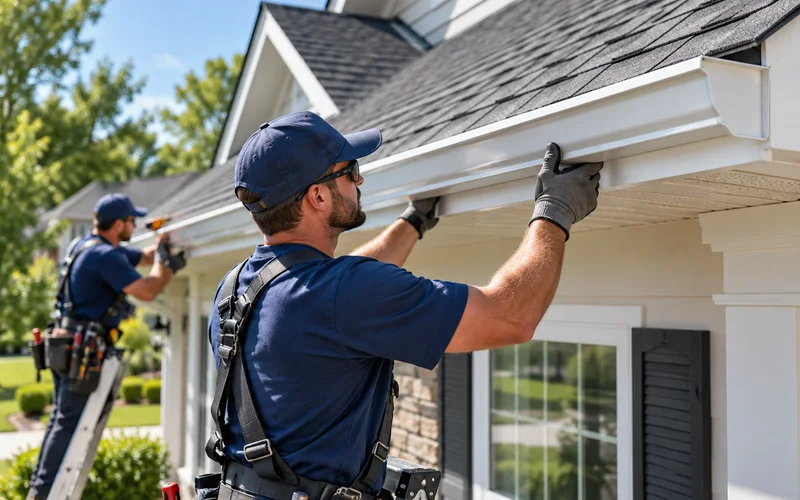
Visual: Completed seamless gutter installation on American residential home
Clean architectural alignment and proper downspout leader placement protect foundations against chronic soil erosion.
When You Should Not Attempt a Weekend DIY Fix
Water management issues can quickly turn into hazardous structural failures. Contact an independent professional immediately if you notice:
Contractor on-roof assessment for hidden fascia rot & hazardous pitch
Before You Call a Gutter Professional
Review these 6 verification checkpoints before accepting any repair or replacement bid.
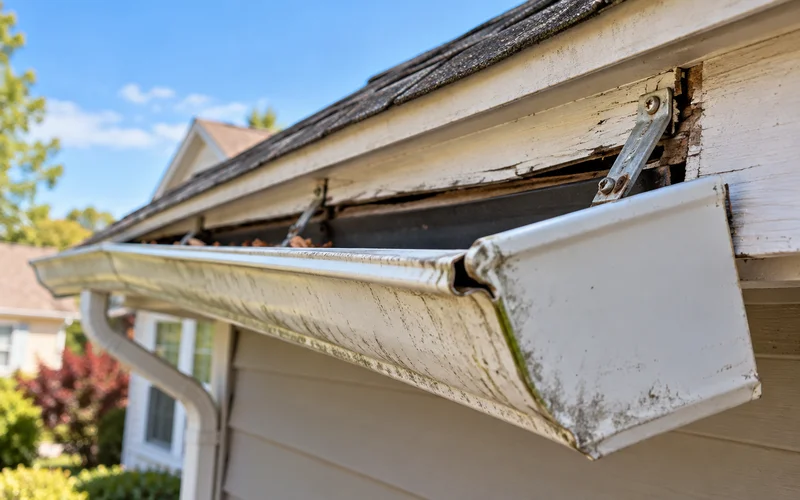 When to Repair Context
Sagging Troughs & Loose Hangers
If gutters sag purely due to loose brackets while fascia wood is sound, re-pitching with heavy-duty screw-in hidden hangers into solid rafter tails resolves the issue without replacement.
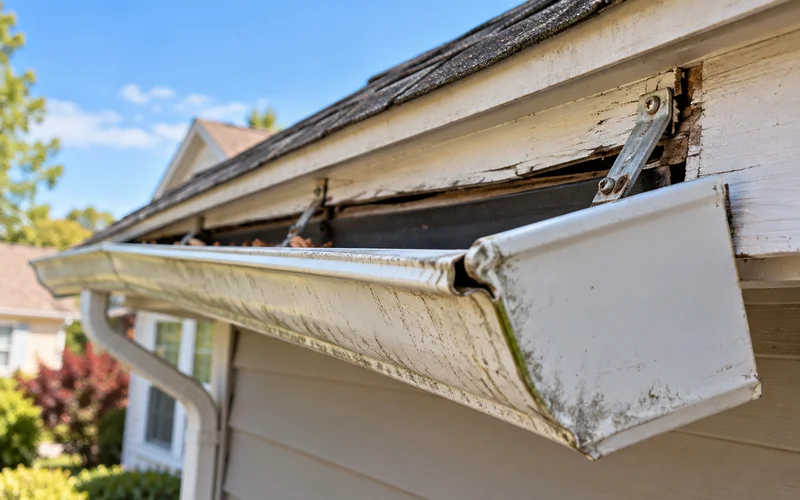 When to Replace Context
Rotted Fascia & Structural Wood Decay
When water seeping behind sectional joints causes rotted or spongy fascia wood, screws can no longer bite. A complete tear-off, carpentry repair, and seamless replacement is required.
Need Help Deciding What Your Gutters Need?
Learn about GutterHelp USA's source-based guidance and potential paid relationships. Contractor referral calls are not currently active.
Repair vs. Replacement Questions
Explore Related Gutter Resources
Learn more about specific roofline symptoms, compare service types, or understand how GutterHelp USA works.
Sources and Editorial Review
Reviewed October 28, 2026. This page summarises general homeowner considerations, not an inspection or installation specification. Images illustrate topics and are not documented GutterHelp USA customer projects.
Further guidance: NC State Extension gutter management, PNNL gutters and downspouts, and FTC advice on hiring home improvement contractors.
Read our editorial policy and correction process.